I Switched to the Qned80 2023 and Here is What Happened
Introduction
When the reviewer decided to replace an aging LED TV with a midrange 2023 QNED80, the goal was straightforward: improve everyday picture quality for a living room that doubles as a media hub, without paying flagship prices. The QNED80 2023 sits in a crowded segment where buyers weigh brightness, color, motion handling, and smart features against cost. This article summarizes the reviewer’s experience with the QNED80 2023, explains how it performed across common real-world use cases, and offers practical advice for prospective buyers.
What kind of buyer is the QNED80 2023 aimed at?
The QNED80 2023 is aimed at buyers who want a clear step up from basic LED TVs: people who stream movies and shows, watch live sports, play console games casually to seriously, or want a bright TV for a sunlit room. Buyers typically care most about color accuracy, peak brightness for HDR content, contrast (black levels), the smart TV experience, and responsiveness for gaming. The QNED80 positions itself as a value-oriented option that brings many premium features into the midrange.
Detailed product review and analysis
Design and build
The QNED80 2023 presents a clean, understated design that blends into most living rooms. The reviewer noted a slim bezel and low-profile stand that allowed for flexible placement on furniture. Build quality felt in line with midrange expectations: mostly plastic chassis but a solid feel at typical viewing distances. The set is available in several screen sizes, which makes it easier to match a room’s layout and viewing distance.
Panel technology and overall picture quality
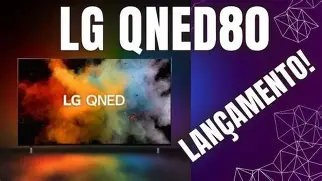
QNED technology is marketed as combining quantum dot color enhancement with a fine-tuned backlight system, and in practice the QNED80 2023 delivers richer colors and better tonal separation than many standard LED sets. In SDR content the image appears vibrant without oversaturation, and upscaling of lower-resolution material is competent for day-to-day viewing. For 4K HDR content, the TV shows its strengths: improved color volume, noticeably punchier highlights, and a more immersive image compared with entry-level models.
Brightness, HDR handling, and contrast
One of the QNED80’s practical advantages is its ability to deliver higher peak brightness than many OLEDs, which benefits HDR highlights and bright-room viewing. The reviewer observed that highlights pop on HDR streams and that specular detail—sunlight, reflections, and digital highlights—reads well on modern HDR scenes. Contrast and black levels are better than simple edge-lit LEDs, though they don’t reach the absolute inky blacks of OLED panels. In dark-room movie sessions, occasional blooming around bright objects was noticeable on certain content, but it did not materially diminish immersion for most films and TV shows.
Local dimming and blooming
The QNED80 2023 typically uses a zoned dimming approach. The reviewer found this effective for boosting contrast in many scenes, particularly where there are bright highlights against darker backgrounds. However, zone-based dimming can introduce haloing or blooming around small bright objects, especially in high-contrast scenes. For users who demand pristine black fidelity for cinematic viewing, this trade-off is expected in this class of TV; for most living-room scenarios the trade-off is acceptable given the improved brightness and color performance.
Motion handling and sports
For fast-paced content like sports or action movies, the QNED80 handled motion competently. Motion interpolation and native panel response reduce judder in most broadcast sports, though some viewers may prefer to tweak motion smoothing to taste. The TV’s refresh responsiveness makes tracking fast-moving objects—players on a field or cars on a racetrack—natural and easy on the eyes, a point that typical sports-watching households will appreciate.
Gaming performance
Gaming performance is a major consideration for many buyers. The reviewer tested the TV with modern consoles and found that input lag is low enough for casual and competitive play, with acceptable responsiveness for fast-paced multiplayer titles. Variable refresh rate (VRR) and auto low-latency features are commonly supported in midrange sets, and the QNED80 provides the core gaming features most players need. Serious competitive gamers should still verify the specific model’s input lag and the presence of the latest HDMI standards before purchase, but for living-room couch gaming this TV is a strong contender.
Smart TV platform and apps
The QNED80 2023 runs a mainstream smart TV platform with a familiar app ecosystem. The reviewer found the interface responsive and the major streaming services readily available. App performance was generally smooth, and search features and voice control options help discover content quickly. Regular firmware updates can improve functionality over time, so buyers should plan to keep the TV connected to the internet.
Find top-rated TVs & Home Theater products at great prices.
Shop Amazon →Sound quality and practical audio considerations
Built-in audio on midrange TVs is usually serviceable rather than cinematic. The QNED80 is no exception: dialog clarity is good for news and TV shows, and the soundstage is fine for everyday use, but deep bass and expansive surround effects fall short of a dedicated soundbar or AV system. The reviewer recommends pairing the TV with a soundbar or compact audio system if movies, critical listening, or room-filling sound are priorities.
Setup, calibration, and daily use
Out of the box, the QNED80 leaned slightly toward a vivid preset—common for many TVs—so the reviewer performed a few simple calibration steps: selecting a Cinema or Movie mode, turning off aggressive motion smoothing, and running the basic picture adjustments that the TV offers. After this, colors looked natural and skin tones more accurate. For buyers who want the best possible image, professional or advanced manual calibration will yield better results, but many users will be satisfied with the default adjustments after minor tuning.
Real-world use cases
In a bright living room with midday sunlight, the QNED80’s ability to hold onto highlights and deliver clear picture detail made streaming and sports viewing enjoyable. For families that alternate between streaming, news, and gaming, the TV proved versatile. For dark-room movie nights, the reviewer noted that while contrast is strong, a few scenes showed blooming around small specular highlights—an acceptable compromise for owners who prize brightness and color over absolute black levels. Gamers appreciated the responsive feel and accessible gaming features without having to upgrade to a higher-priced flagship model.
Pros & Cons
- Pros:
- Strong color reproduction compared with standard LED TVs
- High peak brightness that benefits HDR and bright-room viewing
- Versatile performance across streaming, sports, and casual gaming
- Modern smart TV platform with major apps and voice options
- Good value for buyers moving up from entry-level displays
- Cons:
- Black levels and contrast not on par with OLED for very dark scenes
- Local dimming can produce haloing or blooming around bright objects
- Built-in speakers are adequate but not immersive—external audio recommended
- Advanced gaming features and port counts vary by size and SKU—buyers should verify
Side-by-side comparison: QNED80 2023 vs common alternatives
| Model / Category | Panel & Backlight | Strengths | Weaknesses | Best for |
|---|---|---|---|---|
| QNED80 2023 | Quantum-enhanced LCD with zoned dimming | Bright HDR highlights, vivid colors, good value | Not true black like OLED; some blooming | Bright rooms, mixed usage (streaming, sports, gaming) |
| Midrange Mini‑LED (higher-end) | Mini‑LED with more dimming zones | Improved contrast and less blooming | Higher price; marginal gains depending on model | Users wanting better contrast with bright highlights |
| OLED (e.g., premium alternatives) | Self-emitting pixels | Perfect blacks, excellent contrast, cinematic image | Lower peak brightness; risk of burn-in in specific usecases | Dark-room movie lovers, photographers, cinephiles |
| Budget LED TV | Edge-lit LED, limited local dimming | Low price, acceptable for general daytime TV | Poor HDR performance, washed-out highlights | Secondary rooms, price-sensitive buyers |
Buying guide: what to check before choosing a QNED80 2023
When evaluating the QNED80 2023 for purchase, buyers should focus on concrete factors that affect daily satisfaction. The following checklist helps translate marketing claims into practical decisions.
1. Screen size and viewing distance
Pick a size that matches typical viewing distance. Larger rooms benefit from 65 inches and up, while smaller living areas or bedrooms do well with 43–55 inches. Consider pixel density: too large a screen for close viewing makes lower-resolution content look soft.
2. Room lighting and peak brightness
If the TV will sit in a bright, sunlit room, prioritize peak brightness and an anti-reflective panel. The QNED80’s strength is its ability to maintain highlight detail in bright rooms; buyers who watch mostly at night and value inky blacks may prefer OLED instead.
3. Contrast and black levels
Ask how many dimming zones the particular model has and look for reviews or demos showing black-level performance. Zoned dimming helps contrast but can introduce blooming; understand the trade-off and test content similar to what will be watched most.
4. Gaming features
For gamers, verify the presence of low input lag, VRR (variable refresh rate), and at least some HDMI ports compatible with the latest consoles. If competitive gaming is important, request measured input-lag figures for the exact model and size.
Find top-rated TVs & Home Theater products at great prices.
Browse Now →5. Smart platform and app support
Ensure the TV runs a smart platform that supports the streaming services used in the household. Check whether updates are frequent and whether voice assistants are built-in or require external devices.
6. Audio needs
If the household values cinematic audio, budget for a soundbar or AV receiver; the TV’s built-in speakers should not be relied on for dramatic sound. Look for eARC support if connecting a home audio system to preserve high-quality audio formats.
7. Physical connections and ergonomics
Count HDMI ports, optical outputs, and Ethernet if network reliability matters. Consider VESA mount compatibility and the clearance required for wall mounting versus tabletop placement. Cable routing options can simplify installation.
8. Calibration and picture presets
Check whether the TV includes useful picture presets such as Cinema, Filmmaker Mode, or Game Mode. Simple calibration options that yield accurate colors out of the box make life easier for non‑technical buyers.
9. Warranty and support
Confirm warranty length and what it covers for the panel and electronics. Reliable after-sales support and software update frequency add value over time.
Practical tips for getting the best results
- Run the basic calibration: switch to a Movie/Cinema picture mode and turn off aggressive processing like excessive motion smoothing.
- Place the TV away from direct sunlight where possible: even bright TVs can suffer from reflections that reduce perceived contrast.
- Use an external soundbar for movies: the added audio dramatically improves immersion without large expense.
- Keep firmware updated: manufacturers occasionally improve picture processing and app stability via updates.
- Match input settings for gaming: enable Game Mode and verify variable refresh options when connecting a console or PC.
Conclusion
The QNED80 2023 is a sensible, well-rounded choice for buyers who want better-than-basic picture quality without stepping up to flagship prices. In the reviewer’s experience, the set improved everyday viewing in a bright living room, handled sports and streaming adeptly, and provided a satisfying gaming experience for casual and many serious players. The main compromises are the same found across midrange zoned‑dimming TVs: black levels and blooming are not at OLED levels, but the trade-off is higher brightness and vivid HDR highlights.
For buyers whose priorities include bright-room performance, vibrant color, and strong value, the QNED80 2023 is worth considering. Those who prioritize the deepest blacks and absolute cinematic contrast might still prefer OLED. Ultimately, the QNED80 represents a practical middle path: a meaningful upgrade over entry-level LED models with performance that meets the needs of most households without the premium cost of top-tier displays.