The Truth About the Ecotank Et 2720: Pros, Cons, and Verdict
The EcoTank ET-2720 sits in the wave of cartridge-free printers that promise dramatically lower running costs and less frequent intervention. For buyers weighing convenience, long-term cost, and everyday print quality, the ET-2720 is often presented as a budget-friendly gateway into refillable-ink technology. This article examines the ET-2720 in practical detail — how it performs for the people who buy it, where it excels, where it compromises, and whether it makes sense for specific real-world use cases.
Introduction: what the Ecotank ET-2720 aims to deliver
The core idea behind the EcoTank family is simple: replace small, disposable ink cartridges with larger refillable reservoirs and match that hardware with bundled ink bottles so the first year’s printing (or the first few thousand pages) comes at a much lower cost per page. The ET-2720 is one of the compact, entry-level options in that lineup. It promises multifunction capability — print, scan, copy — while keeping the footprint and price down. Buyers typically care about print reliability, text and photo quality, wireless convenience, and how much they’ll actually save on ink over time. This review focuses on those priorities and offers practical guidance for deciding whether the ET-2720 fits a buyer’s needs.
Product review and analysis
Design and build
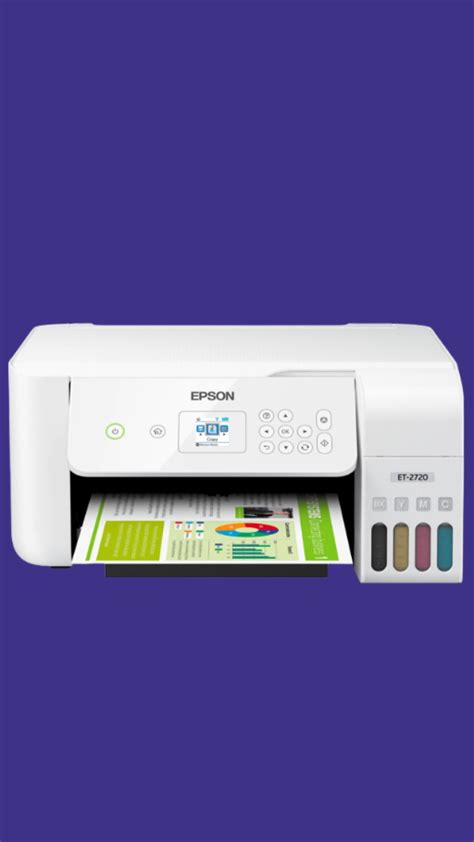
The ET-2720 is designed for small home offices, student desks, and households with moderate printing needs. It follows the compact multi-function form factor: a top-mounted scanner lid, a paper tray that tucks into the chassis, and external, visible ink tanks on the side or front for easy monitoring. The machine prioritizes space savings over heavy-duty durability, so it feels lighter and less industrial than larger multifunction printers aimed at small businesses.
Controls are typically minimal — a small display and a few physical buttons — reflecting the target buyer who wants simple operation rather than a full-service office control panel. The use of refillable tanks means there are clear fill lines and cap mechanisms designed to reduce spills; still, users should plan to refill carefully.
Print quality and performance
For everyday black text documents — letters, homework, invoices — the ET-2720 delivers solid, legible output with sufficiently crisp characters for home and small-business use. Text quality is generally comparable to other consumer inkjets in its class, making it a dependable choice for document-oriented tasks.
Color document printing is suitable for spreadsheets, charts, classroom handouts, and casual graphics. The ET-2720’s color reproduction provides pleasant, saturated results for general use, though it will not match higher-end photo printers or professional photo labs for fine tonal range or archival quality.
Photo printing can be done for snapshots and casual prints. Buyers who expect gallery-quality photos, smooth gradients, or professional color fidelity should consider a dedicated photo printer or professional printing services. For most families and students who want to print vacation pictures, craft projects, or small posters, the ET-2720’s photo output is adequate and convenient.
Print speed for black-and-white and color documents is competitive for an entry-level multifunction inkjet, but it is not optimized for high-throughput environments. When the day’s work requires dozens of pages, users will notice periodic pauses for processing and occasional printhead maintenance cycles.
Ink system and running costs
Where the ET-2720 truly changes the ownership equation is the ink system. Instead of cartridges, it uses refillable ink tanks and bottle refills. That model reduces the number of replacements and drops the long-term cost per page substantially compared with standard cartridge-based printers. Buyers who print regularly — dozens to hundreds of pages per month — will see the running-cost advantage most clearly.
Looking for the best Electronics deals on Amazon?
See Deals →Refilling is straightforward but requires care: the included bottles are engineered to mate with the tanks to make refilling as mess-free as possible, but spills still happen if rushed. The environmental benefit is noticeable: fewer plastic cartridges end up in waste streams, and a single set of bottles can yield many times the pages of an equivalent set of cartridges.
Connectivity, software, and mobile printing
The ET-2720 supports modern wireless connectivity so that printing from laptops, phones, and tablets is convenient in home and small-office networks. Typical features expected at this level include support for mobile-printing apps and common network printing standards, which simplify printing from mobile devices without the need to transfer files to a computer first. Setup can be straightforward with the manufacturer’s app, although first-time wireless configuration can sometimes take a little patience for users unfamiliar with printer network settings.
Software functionality focuses on basic scanning and copy features, mobile scanning, and print management. Advanced network features and enterprise-grade management aren’t part of the package; this is a device intended for personal productivity rather than IT-managed fleets.
Maintenance and reliability
Long-term reliability depends on usage patterns. The refillable ink system reduces interruptions from cartridge changes, but the printhead maintenance cycles and occasional nozzle cleaning are still part of ownership. Users who print infrequently may discover clogged nozzles over time — a common situation with dye-based ink jets — so regular use or scheduled nozzle checks help maintain consistent print quality.
Replacement parts and service options vary by region and vendor; buyers should review warranty details and local support options if service convenience is a priority. For many home users, the convenience of refillable ink outweighs the modest maintenance considerations.
Real-world use cases: who benefits most
- Home office and remote workers: The ET-2720 is a fit for individuals who print documents, occasional color charts, and light marketing materials. The low running cost helps control monthly expenses.
- Students and families: With moderate monthly print volumes and the need to print homework, school newsletters, and photos, families find the refillable design practical and economical.
- Small-scale entrepreneurs and crafters: For those producing modest batches of labels, flyers, or craft prints, the device provides reasonable color quality and lower ink costs.
- Not ideal for: High-volume offices, professional photo studios, or environments requiring heavy-duty daily throughput and enterprise management features.
Pros & Cons
Pros
- Significantly lower long-term ink costs due to refillable tanks and bundled bottles.
- Compact, space-conscious design suitable for desks and small offices.
- All-in-one functionality: print, scan, and copy in a single unit.
- Convenience of fewer interruptions to replace cartridges — useful for regular home and small-business printing.
- Reduced plastic waste compared with cartridge-based printers.
Cons
- Higher upfront cost than basic cartridge-based consumer printers (the trade-off for lower running costs).
- Not a professional photo printer — limited color accuracy and dynamic range for demanding photo work.
- Maintenance needs (printhead cleaning, possible nozzle clogs) if the printer is used infrequently.
- Relatively modest paper-handling and duty-cycle limits compared with larger small-business printers.
- Refilling requires care to avoid ink spills; bottles and tanks must be handled properly.
Comparison: How the ET-2720 stacks up
| Feature | EcoTank ET-2720 | Standard Cartridge Inkjet | Entry-Level Laser Printer |
|---|---|---|---|
| Initial Cost | Moderate — more than cheapest cartridge models | Low — inexpensive up front | Moderate to high — toner machines cost more initially |
| Running Cost | Low — refill bottles give much lower cost per page | High — cartridge replacements add up | Low for mono; color toner is expensive |
| Print Technology | Inkjet with refillable tanks | Inkjet with cartridges | Laser (toner) |
| Color & Photo Quality | Good for casual photos and graphics | Variable; some deliver strong photos | Limited (laser is better for text) |
| Monthly Volume Suitability | Low to moderate | Low | Moderate to high (mono) |
| Environmental Impact | Improved due to fewer cartridges | More plastic waste from cartridges | Less frequent consumable changes but toner cartridges still require recycling |
| Best for | Home users and small-home offices wanting low running costs | Occasional users needing low upfront spending | Users needing fast monochrome printing and higher monthly volumes |
Buying guide: What to consider before choosing the ET-2720
1. Estimate monthly printing volume
Start by estimating how many pages are printed each month. The ET-2720 shines when monthly usage is steady — for example, several dozen to a few hundred pages monthly — because the lower cost per page begins to outweigh the higher initial purchase price. If printing is extremely light (a handful of pages per month), cartridge-based machines or shared office printers might be more cost-effective in the short term.
2. Consider the mix of documents
Decide whether the primary need is black text, color documents, or photo prints. If a user prints primarily black-and-white text and cares about fast throughput, an entry-level laser could be a better fit. If color printing and occasional photos are required, the ET-2720 offers a balanced approach.
3. Space and placement
The ET-2720 is compact, but the refillable tank design means it needs a bit of clearance for easy access to the ink reservoirs. Place it on a stable surface and allow room to open the scanner lid. If placement is tight, consider models with different tank positioning.
Shop the latest Electronics picks on Amazon.
Browse Now →4. Connectivity and workflows
Confirm that the printer supports the preferred connection method — Wi-Fi, USB, or direct mobile printing. Users who frequently print from phones and tablets should verify that the manufacturer’s mobile app and standard mobile printing protocols are available and that setup works with the home network.
5. Long-term costs and supplies
Factor in the price of refill bottles and consumables over multiple years. One of the strongest arguments for the ET-2720 is predictable and low long-term ink spend; however, take into account how often bottles are needed for the expected monthly output and whether replacement bottles are readily available in the local market.
6. Maintenance and support
Check warranty terms and local service options. For users who prefer minimal hands-on maintenance, it’s worth verifying return/repair procedures and whether extended warranty packages are offered. Also consider whether the user is comfortable performing printhead cleanings and occasional maintenance tasks.
7. Environmental and waste considerations
Refillable tanks reduce cartridge disposal, which is an attractive benefit for environmentally minded buyers. Still, buyers should factor the proper recycling or disposal of used bottles and packaging into their broader sustainability plans.
Maintenance tips and practical advice for owners
- Use the printer regularly: Frequent use keeps ink moving through the nozzles and reduces the risk of clogs.
- Refill carefully: Follow the manufacturer’s refill instructions, work over a disposable surface, and tighten caps securely to avoid leaks.
- Keep spare ink bottles: For heavy users, having a replacement set of bottles avoids downtime.
- Run nozzle checks: When colors look off, run a nozzle check and cleaning cycle before concluding an ink issue.
- Use genuine ink: Genuine bottles are formulated for the system; using nonapproved fluids can damage printheads and void warranties.
Conclusion
The EcoTank ET-2720 is a pragmatic option for people who print regularly and want to lower their ink spend without sacrificing the convenience of a compact, all-in-one device. Its strengths are clear: meaningful long-term savings on ink, reduced waste compared with cartridge systems, and adequate print quality for documents and casual color work. It is not a specialist photo printer, nor is it built for heavy daily workloads in larger offices, but for home offices, students, and small-business owners with moderate printing needs, it offers a compelling balance of economy and convenience.
Buyers should weigh their typical monthly pages, the importance of color/photo output, and tolerance for periodic maintenance. For those with steady, moderate-volume printing, the ET-2720’s lower running cost and ease of refilling are real advantages that can justify the higher initial investment. For users who print only rarely or need professional-grade photos, other solutions may be better suited.
Ultimately, the decision comes down to usage patterns: when lower recurring costs, compact design, and multifunction convenience line up with a buyer’s priorities, the ET-2720 is a sound and practical choice.