The Ultimate Setup Guide for Your Xe Wireless
The transition from wired to wireless peripherals has been one of the most significant shifts in the electronics industry over the last decade. For enthusiasts and professionals alike, the Vaxee Xe Wireless represents a pinnacle of engineering that prioritizes performance and stability over superfluous features. Developing a setup that maximizes the potential of this high-end device requires more than just plugging in a dongle. It involves understanding the nuance of sensor placement, firmware optimization, and environmental configuration to ensure the hardware operates at its theoretical limits.
This guide serves as a comprehensive resource for owners and prospective buyers of the Xe Wireless. By focusing on the intersection of technical specifications and ergonomic application, users can transform a standard peripheral into a precision tool. Whether the objective is competitive gaming at the highest tiers or achieving a seamless, clutter-free professional workstation, the following analysis and instructional steps provide the necessary roadmap for success.
Advanced Product Analysis: The Philosophy of the Xe Wireless
To set up the Xe Wireless effectively, one must first understand the design philosophy that differentiates it from the broader market of consumer electronics. Most wireless mice are built with a focus on weight reduction or aesthetic lighting; however, the Xe Wireless is engineered for consistency. The internal architecture utilizes a high-grade 3395 sensor, which is currently the industry standard for accuracy and power efficiency. But hardware is only half the battle. The firmware implementation is where this device truly shines, offering multiple performance modes that allow users to choose between maximum battery life and maximum responsiveness.
A key factor that sets this device apart is the mechanical design of the primary buttons. Many wireless units suffer from "mushy" clicks due to the structural changes required to house a battery and wireless transmitter. The Xe Wireless employs a unique tensioning system that ensures a crisp, tactile response regardless of where the finger makes contact with the button. This consistency is vital for tasks requiring high click frequency and precision, such as real-time strategy games or detailed digital illustration.
The exterior of the device is coated in a finish designed for long-term grip. Unlike glossy coatings that become slippery with moisture or rubberized grips that degrade over time, the matte texture of the Xe Wireless is built for durability. This material choice reflects a commitment to the "end-user experience" over "shelf appeal." When setting up the device, it is important to recognize that the weight—while light—is balanced centrally to prevent any "tilt" during rapid lifting and repositioning movements.
Pros and Cons of the Xe Wireless Architecture
- Exceptional Latency Performance: The competitive mode provides a wireless connection that is indistinguishable from a wired high-speed connection, ensuring that every millisecond is accounted for.
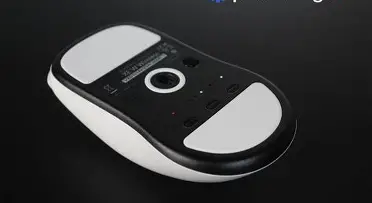
- Simplicity in Operation: By utilizing physical switches on the bottom of the device, users can change DPI, polling rate, and click response time without the need for bloated background software.
- Charging Versatility: The inclusion of a high-quality, flexible paracord-style cable ensures that if the battery does run low during a critical task, the wired experience remains uncompromised.
- Structural Integrity: The shell is notably rigid, showing no signs of creaking or flexing even under significant pressure, which is often a trade-off in other lightweight wireless designs.
- Ergonomic Versatility: The symmetrical shape accommodates various grip styles, including palm, claw, and fingertip, making it a "safe" shape for a wide majority of users.
- Weight Distribution: While balanced, some users coming from ultra-lightward enthusiasts’ mice may find the weight slightly higher than the 60-gram competitors.
- Lack of Software Customization: For users who enjoy complex macros or RGB lighting synchronization, the "plug-and-play" nature of this device might feel restrictive.
- Battery Life in High-Performance Mode: When the Competitive Mode is engaged, the battery drain increases significantly, requiring more frequent charging compared to office-oriented wireless devices.
Configuration and Performance Metrics
When comparing the Xe Wireless to other devices in its category, the distinction becomes clear through technical data. Most general-purpose electronics prioritize "feature density," while this device prioritizes "data integrity." The following table outlines how the Xe Wireless stacks up against standard wired and generic wireless mice across several critical performance categories.
| Feature Category | Standard Generic Wireless | High-End Wired Peripherals | Xe Wireless Performance |
|---|---|---|---|
| Sensor Resolution (DPI) | 800 - 3200 | Up to 26,000 | 400, 800, 1600, 3200 (Stable) |
| Polling Rate (Hz) | 125 - 500 Hz | 1000 - 8000 Hz | 125, 500, 1000 Hz |
| Wireless Protocol | Standard 2.4GHz / Bluetooth | N/A | Optimized 2.4GHz High-Speed |
| Software Dependency | High (Mandatory) | Moderate | None (Physical Switches) |
| Build Material | Standard ABS Plastic | High-Grade Polymer | Special-Coated Rigid Shell |
Step-by-Step Installation and Setup Guide
Phase 1: Environmental Preparation
The most common mistake owners make when setting up a high-performance wireless device is neglecting the radio frequency (RF) environment. The 2.4GHz band is incredibly crowded due to Wi-Fi routers, smartphones, and even microwave ovens. To ensure your Xe Wireless maintains a perfect signal, the receiver should be placed as close to the mouse as possible. Use the included USB extender cable to bring the receiver out from behind the PC tower and place it on your desk, ideally within twelve inches of your mousepad. This minimizes the risk of signal interference and packet loss during data transmission.
Find top-rated Electronics products at great prices.
Browse Now →Phase 2: Fine-Tuning the Physical Controls
Unlike most electronics that require an installer and a reboot, the Xe Wireless is configured via the buttons located on the underside. Understanding these settings is crucial for a tailored experience. The first switch controls the DPI (Dots Per Inch). Most professional users tend to favor 400 or 800 DPI for greater control, though 1600 is popular for high-resolution 4K displays. The second switch handles the Polling Rate. For maximum performance, set this to 1000Hz; however, if you are using an older CPU that struggles under load, 500Hz may provide a more stable frame rate in-game.
The third setting, which is often overlooked, is the Click Response Time. This determines how quickly the mouse registers a click after the physical switch is depressed. Competitive users will want the "Fast" setting, but if you find yourself accidentally double-clicking, moving to the "Medium" or "Standard" setting will provide a more deliberate interaction. Experimenting with these combinations is essential during the first week of ownership.
Phase 3: Sensor Calibration and Surface Choice
The 3395 sensor inside the Xe Wireless is capable of tracking on a wide variety of surfaces, but for optimal results, a high-quality cloth or hybrid mousepad is recommended. Avoid glass or highly reflective surfaces unless they are specifically designed for optical sensors. During setup, check for the Lift-Off Distance (LOD). Professionals usually prefer a low LOD so that the sensor stops tracking as soon as the mouse is slightly raised, preventing unwanted cursor movement during large "arm-aiming" maneuvers. This can often be toggled through specific button combinations described in the hardware manual.
The Buying Guide: Is the Xe Wireless Right for You?
Before committing to a high-end wireless setup, consumers must evaluate their specific needs versus the capabilities of the hardware. The electronics market is saturated with options, yet the Xe Wireless occupies a niche defined by reliability and utilitarian design. When considering a purchase, ask yourself the following questions:
Do you value stability over customizability?
Many users spend hours fiddling with RGB colors and macro assignments. If that is a priority, this device may feel too clinical. However, if you are a user who wants the device to perform exactly the same way every time you turn it on, without the risk of software crashes or firmware bugs, the Xe Wireless is unparalleled. It is the "driverless" approach that has made it a favorite among travelers and tournament players who cannot install software on foreign machines.
What is your grip style and hand size?
The Xe Wireless features a medium-sized symmetrical shape with a subtle hump in the middle. This is ideal for claw and palm grips for those with small to medium hands, and perfect for fingertip grips for those with larger hands. If you prefer a highly ergonomic, slanted shape (right-handed asymmetrical), you might experience an adjustment period. However, the neutrality of the Xe shape often leads to less hand fatigue during long-duration sessions because it doesn't force the hand into a specific, rigid posture.
What is your primary use case?
While marketed toward the competitive gaming sector, the Xe Wireless has found a secondary home in the productivity space. Video editors and CAD designers benefit from the high-polling rate and sensor accuracy, which allow for pixel-perfect movements. If your work involves high-stakes precision where a stutter or lag could mean a ruined project, the professional-grade wireless tech here is a justified investment. For casual web browsing, the device is certainly capable, but its advanced features may be overkill for a basic home-office setup.
Shop the latest Electronics picks on Amazon.
See Deals →Maintenance and Longevity
To ensure your setup remains "ultimate" over the lifespan of the device, regular maintenance is required. Because the Xe Wireless uses high-quality PTFE feet (the skates on the bottom), they will eventually wear down depending on the friction of your mousepad. Keeping your mousepad clean from dust and skin oils will significantly extend the life of these feet and maintain a consistent glide. Every few months, use a microfiber cloth to gently wipe the sensor lens to ensure no debris is obstructing the optical path.
Battery health is another consideration. Lithium-ion batteries prefer not to be drained to 0%. Try to plug in your Xe Wireless when it reaches the 20% mark. Since the device charges rapidly, a 30-minute session in "wired mode" is usually enough to provide several days of wireless use. Using the provided cable ensures that the voltage and current are within the intended specifications, protecting the internal circuitry from potential damage caused by low-quality third-party chargers.
Integration into a Modern Ecosystem
Setting up the Xe Wireless is the final piece of creating a high-performance environment. It should be paired with a high-refresh-rate monitor (144Hz or higher) to truly see the benefits of the 1000Hz polling rate. On a standard 60Hz office monitor, the human eye often cannot perceive the micro-movements that the Xe sensor captures. Furthermore, ensuring that your operating system's "mouse acceleration" or "enhance pointer precision" features are disabled is paramount. These software "enhancements" actually interfere with the raw data being sent from the 3395 sensor, leading to a disconnected feeling between your hand and the cursor.
For those using the device across multiple machines, the Xe's ability to store settings on the hardware itself is a massive boon. You can calibrate your DPI and click response on your main desktop, then move the dongle to a laptop, and the device will behave identically. This consistency of habit is what allows for the development of "muscle memory," a critical component for anyone looking to improve their speed and accuracy in electronic tasks.
Conclusion
The Xe Wireless is more than just a piece of electronics; it is a manifestation of refined design and engineering. By following this guide, users can ensure that their setup is optimized for the specific strengths of the device. From the initial placement of the wireless receiver to the fine-tuning of the click response times, every step contributes to a more responsive and reliable experience. While the market continues to chase trends like honeycomb shells and excessive lighting, the Xe Wireless remains a steadfast choice for those who demand performance above all else. With the right configuration, it stands as a central pillar of a modern, efficient, and precise digital toolkit.